Research (Practicle, Real-World) Quiz # 8

Instructions
Quiz: Research (Practicle, Real-World) Quiz # 8
Subject: Presentation Of Research Data
Total Questions: 25 MCQs
Time: 25 Minutes

Note

  • Do not refresh the page while taking the test.
  • Results along with correct answers will be shown at the end of the test.
Research (Practicle, Real-World) Quiz # 8
Question 1 of 25
00:00
  • _______ is a tabular display of how often each value for different variables was selected by a subject

  • A graph that is commonly used to show trends over time is known as Line graph?

  • A graph that is commonly used to show trends over time is known as Line graph?

  • Marginal is the univariate information at the end of rows or columns in a bivariate table.

  • Pie chart is a circular graph that is divided into sectors where each sector represents a proportion of a variable’s value as part of a whole.

  • On a graph, this is the horizontal axis that corresponds to the independent variable is known as ?

  • On a graph, this is the vertical axis that corresponds to the dependent variable is known as ?

  • In the method of grounded theory analysis that involves attribute,______, and analytic codes, this is the last stage of coding is known as analytic code

  • In the method of grounded theory analysis that involves attribute,______, and analytic codes, this is the last stage of coding is known as analytic code

  • In the method of grounded theory analysis that involves attribute, index, and analytic codes, this is the first level of coding is known as ?

  • In the method of grounded theory analysis that involves open, axial, and selective coding, this is the middle stage of coding that links data themes is known as ?

  • In the method of grounded theory analysis that involves open, axial, and selective coding, this is the middle stage of coding that links data themes is known as ?

  • ________ is a means of linking qualitative themes where the themes are linked to each other with circles with, perhaps, different circle sizes representing the various degrees of importance of a theme to the overall research goal.

  • ________ is a general form of qualitative coding where themes are identified as similar or different to each other and where the units that are identified as similar then become part of the same category.

  • In qualitative data analysis, this is the meaning that subjects give to their experiences is known as Emic meaning.

  • In quantitative data analysis, this is the meaning that researchers give to the data based on the subject’s own interpretations (emic meaning) as well as the perspective of the researcher’s discipline is known as Etic meaning.

  • In quantitative data analysis, this is the meaning that researchers give to the data based on the subject’s own interpretations (emic meaning) as well as the perspective of the researcher’s discipline is known as Etic meaning.

  • First-level coding is Initial codes researchers make in qualitative data analysis.

  • Flowchart in quantitative data analysis, this is a visual means of linking themes in the data.

  • In the method of grounded theory analysis that involves_________and analytic codes is known as Index code

  • In quantitative analysis, these are codes used to give meaning to observed content, and it is common in content analysis is known as Latent content.

  • A form of qualitative analysis that focuses on elements that are easily identified and counted, such as specific words,_________, or themes. This is common in content analysis.

  • _________is in the method of grounded theory analysis that involves open, axial, and selective coding, this is the first stage of thematic coding that tries to identify the main themes in the data.

  • In the method of grounded theory analysis that involves open, axial, and selective coding is known as ?

  • Qualitative explanations tend to be _____ and quantitative explanations tend to be _____.

Research (Practicle, Real-World) Skill Assessment

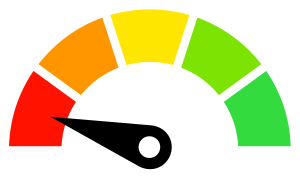
Overall Skill Level-Poor

Your Skill Level: Poor

Retake Quizzes to improve it

Research (Practicle, Real-World) Skill Assessment

Overall Skill Level-Poor

Your Skill Level: Poor

Retake Quizzes to improve it